
While iconic musicians experienced career shaping moments at the Grammys, the social media obsessed community were busy spotting meme worthy moments.
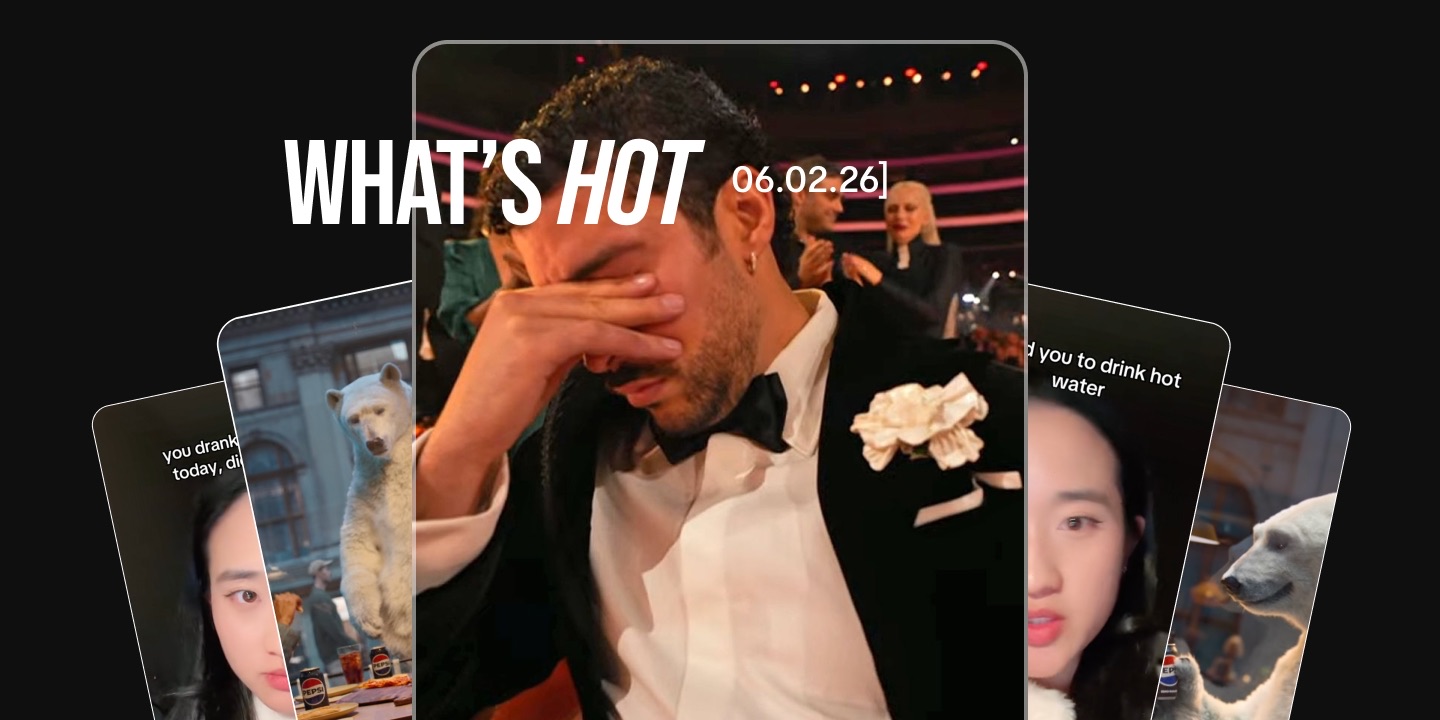
Bad Bunny’s reaction to winning Album of the Year takes the Grammy meme crown for 2026.
When Harry Styles announced Bad Bunny as the winner, Bad Bunny was in a state of shock and stayed seated while the crowd went wild, covering his eyes as he started to cry.
The meme is a social media manager's dream – it totally dominated LinkedIn on the Monday after the Grammys. The picture of the singer was posted with captions such as:
The usage of the meme has already slowed down as the internet moves on to it’s next obsession. However, the opportunity for brands with Bad Bunny remains relevant, as he is about to make history as the first solo male Latin artist to perform the Super Bowl half-time show.
Brand opportunity
Bad Bunny is already big, but he’s going to be even bigger in 2026. With this in mind, brands like e.l.f and Duolingo are encouraging Spanish language learning in their campaigns, uniting English and Spanish speaking audiences. This is a sign for brands that tapping into your Hispanic community and shaping campaigns based on their values and interests is a growing opportunity. This bilingual and bicultural approach is key to capturing Gen Z and Millennial audiences, who are increasingly valuing cultural relevance in the brands they support.
Speaking of the Super Bowl, the sporting event is one of the biggest advertising stages for brands.
This year, PepsiCo is mass-weaponizing nostalgia. Their 2026 Super Bowl ad features a polar bear (Coca-Cola's most iconic brand asset) doing a blind taste test… and choosing Pepsi.
It's a 30-second collision of two of the most famous campaigns in advertising history: a mashup of the Pepsi Challenge from 1975 X Coke's polar bears from 1993. It’s a strategic masterpiece.
Pepsi took their competitor's most distinctive furry asset – something completely embedded in cultural memory – and made it reject Coca-Cola on camera.
What makes this smart is how Pepsi updated the imagery. Rather than relying on “lazy” or obvious nostalgia and assuming the reference does the work, this longstanding rivalry is reframed with a modern narrative and cultural references that land today.
That's the difference between nostalgia as a crutch and nostalgia as a springboard. The ad earns attention from people who remember the cola wars, and the people who don't.
Brand opportunity
Nostalgia marketing is IN. It allows audiences to build deep emotional connections with brands by tapping into positive, comforting memories of the "good old days". This increases brand loyalty and drives purchasing decisions, especially during times of uncertainty. Nostalgia marketing is a huge opportunity for legacy brands, such as Dove, as their products transcend generations. A campaign featuring people across multiple generations and leaning into family connections would be relevant to a mass audience, and hook them in through emotive storytelling.
Are you on Chinese TikTok?
The "Chinese Grandma" or "Chinese medicine" TikTok trend began with Sherry Zhu, a New Jersey based creator with family from Shandong and Zhejiang, China. She announced to her followers, regardless of race or ethnicity, that "they are Chinese."
The idea was widely embraced and has since evolved into non-Chinese people adopting habits that would typically be associated with Chinese culture, such as drinking hot water and teas with Traditional Chinese Medicine (TCM) ingredients, eating congee, wearing house slippers, and starting the day with armpit whacking and fifty jumps to stimulate lymphatic drainage.
This "everyone is Chinese now" phenomenon reflects a wider interest in the wellness movement. Chinese medicine doctors have observed a recent surge in interest for TCM both online and in clinics, and while Google searches for TCM in the UK and US have been stable over the past five years, they suddenly doubled in December 2025.
Brand opportunity
A well-aligned partner for this trend would be Yogi Tea. The brand could collaborate with creators on an “Ancient Rituals, Modern Lives” series to spotlight the teas that include ingredients recommended in Traditional Chinese Medicine. By working with culturally informed creators and focusing on balance and routine, rather than medical claims, Yogi Tea could engage new and existing customers by keeping content educational, respectful, and brand-safe.
Want to discuss how your brand can align with cultural and social media trends? Reach out at hello@digitalvoices.com.